
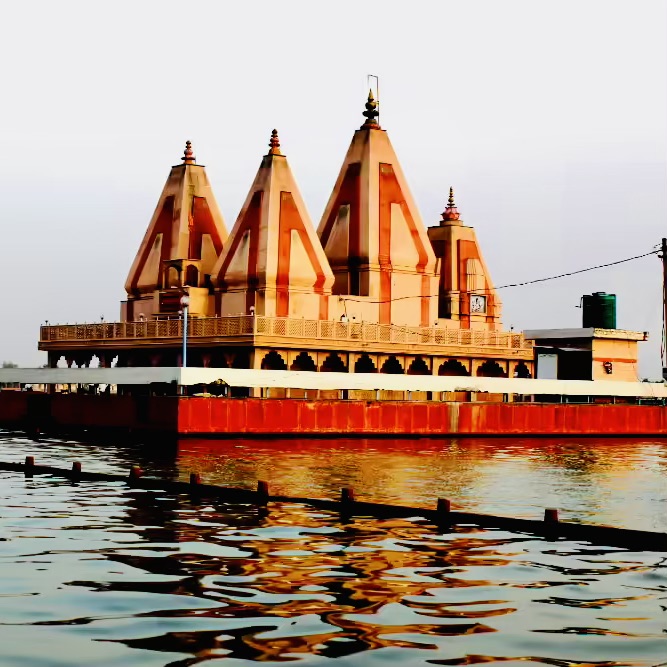
Of all the Punya Kshetras of the Mahabharata, there is one name that barely needs an introduction. Say it aloud; Kurukshetra; and even those who’ve never opened the epic will nod knowingly. This is not just geography. This is Dharma with a postcode.
dharma-kṣhetre kuru-kṣhetre samavetā yuyutsavaḥ
māmakāḥ pāṇḍavāśhchaiva kimakurvata sañjaya
The Bhagavad Gita doesn’t waste time easing us in. It’s very first verse calls Kurukshetra dharma-kṣhetra; a field where righteousness itself stands witness. Before swords clash or conches sound, the land is already declared sacred.
That alone should make us pause. When an epic like the Mahabharata labels a place as a Dharma Kshetra, it’s not poetic flourish; it’s a cosmic memo.
This is where Sri Krishna gave the Gita Upadesa to a conflicted Arjuna, turning a battlefield into the world’s greatest classroom.
And as if that weren’t enough, it is here that Bhishmacharya, lying on his bed of arrows, offers Vishnu Sahasranama to Yudhishthira; teaching that even in agony, wisdom can flow like nectar. Not many places can hold both war cries and mantras in the same breath.
But Kurukshetra’s sanctity didn’t begin with the Pandavas. Long before, the legendary ancestor King Kuru performed intense penance here, determined to make this land unequalled in spiritual power. Tradition says he ploughed the soil himself using Shiva’s bull and Yama’s buffalo.
Yes, when your farming tools come from gods, you’re clearly playing a long game. Pleased with his tapas, the Devas granted a boon: anyone who dies in battle or performs penance here attains Swarga.
Go further back, and Kurukshetra becomes even more formidable. This is where Parashurama annihilated corrupt Kshatriya clans, creating the fearsome Samanta Panchaka: five lakes of blood. Grim, yes. But the Pitrus later blessed this place: those who bathe here and honour their ancestors gain blessings that even heaven struggles to refuse.
Rishi Pulatsya goes further still. He declares that even intending to go to Kurukshetra destroys sin. Living there, thinking of it, performing Pitru Tarpana, each act grants the merit of mighty Rajasuya and Ashwamedha Yagyas.
And in a final, almost mischievous twist, the Mahabharata says that even the dust of Kurukshetra, carried by the wind, can lift a sinner toward moksha.
Imagine that !! Liberation by accident.
Places like Kurukshetra remind us that spiritual power is not always quiet or gentle. Sometimes it roars, sometimes it bleeds, sometimes it whispers the Gita in the middle of chaos.
If reflecting on such sacred landscapes stirs something within you, perhaps it’s time to explore them not just as history, but as living currents of sadhana.
Many seekers have found that walking this inner terrain becomes easier when done in shared intent. Step into our Tantra circle: https://shorturl.at/6gxgH where sacred geography turns into lived experience, and the journey deepens naturally from there.
No responses yet