
One of the most common mistakes modern seekers make is trying to confine a Devata into a single definition as if the divine fits neatly into a spreadsheet.
Recently, a Facebook acquaintance messaged me, mildly confused.
He asked why I had written that a certain Devata was an amsha of Vishnu, yet also “liked” a post where another practitioner stated the same Devata was an amsha of Shiva.
The tone was polite.
The confusion was genuine.
But the mindset revealed something deeper:
• A lack of lived sadhana with Devatas
• An attachment to neat tidy categories
• And if we’re honest too much book knowledge without experience
There is a beautiful Tamil saying in Saiva tradition:
“Avan arulāley avan thāl panindu.”
Only by His grace may we even bow at His feet.
Meaning: we do not approach a Devata because we are clever readers; we approach because they allow us to approach.
A Devata cannot be reduced to logic, labels, or the five senses.
They are not characters in a fantasy novel waiting to be sorted into Hogwarts houses.
They are consciousness itself.
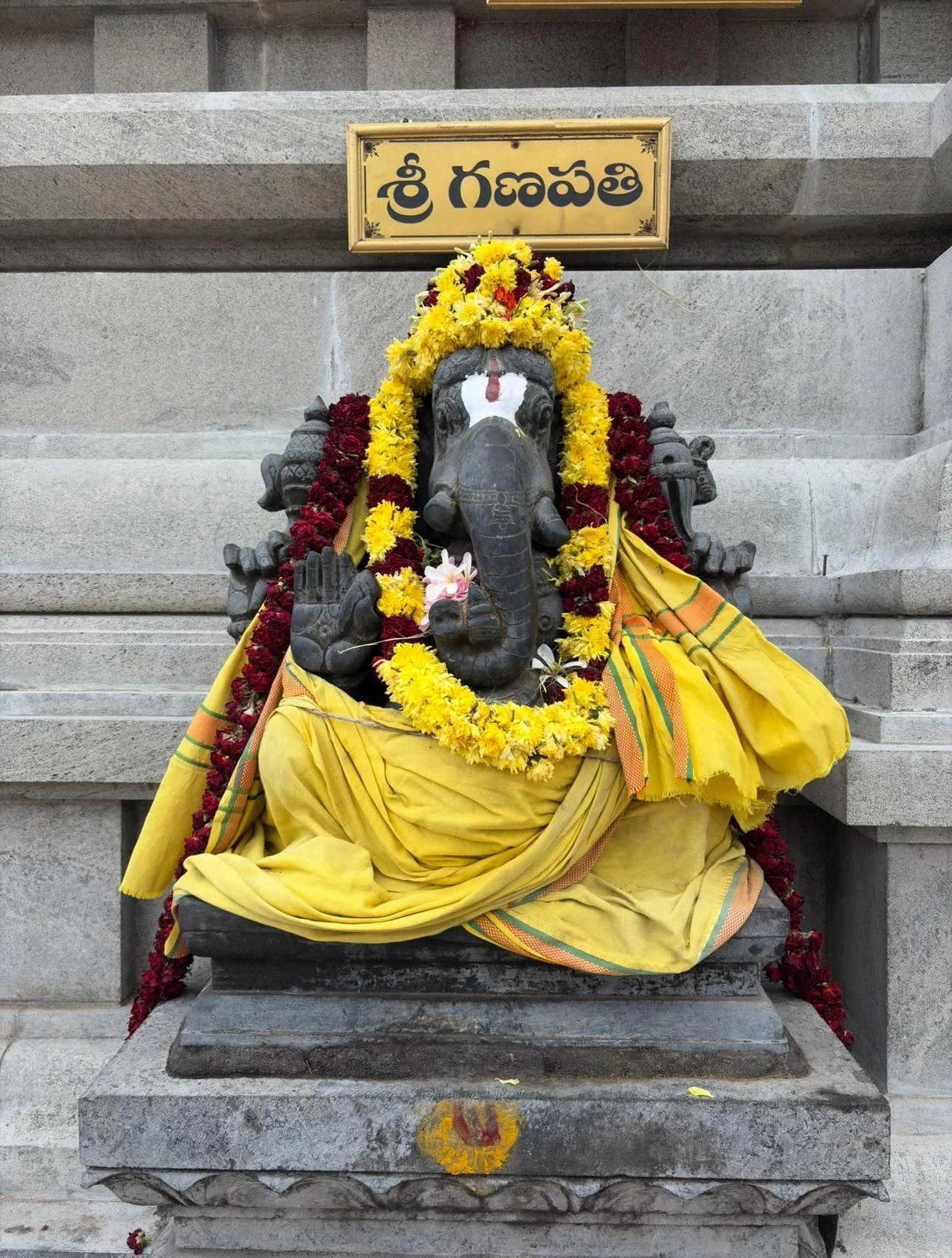
To illustrate this, let’s take Ganesha since he is often assumed to be the simplest, most “children’s book” deity, which is adorable and wildly incorrect. ( A gentle disclaimer: this is a generic illustration, not a deep dive into the Ganapatya tradition.)
In the texts, we find multiple narratives:
• In the Vinayaka Purana: he is born to Rishi Kashyapa and Aditi as Mahotkata.
• In the Shiva Purana: he is created by Devi.
• In the Varaha Purana: he emerges from Shiva.
• In the Brahma-vaivarta Purana: he is born to Parvati after a vrata to Vishnu and carries Sri Krishna’s amsha.
And then, Devi Radha in the Brahmanda Purana quietly delivers a truth that collapses all debate:
The Shiva principle and the Vishnu principle are one: just expressing differently.
So, if Shiva can incarnate as Parashurama in a Vaishnava form…
Why is it shocking that Ganesha can appear as a Vaishnava principle in a Shaiva form?
This is why spiritual maturity requires humility.
Read a sahasranama of a Devata you do not know.
Take notes.
Then do two years of mantra japa, puja, and meditation on that Devata.
Return to your notes.
You will likely tear them up and whisper,
“Ah… I knew nothing.”
Because scriptures are not merely words; they are keys.
Sadhana is what unlocks them.
The divine cannot be simplified into one category.
But it can be experienced.
And that experience changes everything.
If something in these words stirred recognition rather than argument, perhaps you are ready for depth not definitions.
You’re welcome to step into our Tantra circle https://shorturl.at/4Fs5a a space where devotion becomes experience and understanding grows from practice, not debate.
No responses yet