
There’s a quiet secret hiding inside most ancient fairy tales: they’re rarely “just stories.”
They rise from shared human memory; from what historian of religion Mircea Eliade called hierophany: moments when the sacred quietly reveals itself through ordinary life.
Across cultures, one archetype keeps returning with a wink and a sideways smile: the Trickster.
In Roman theatre, he appears as the Dolosus Servus, the clever servant everyone underestimates. He doesn’t fight battles or inherit wealth. Instead, he uses wit, timing, and a little mischief to carry his master to heights no one expected including the master himself.
If this sounds familiar, it should.
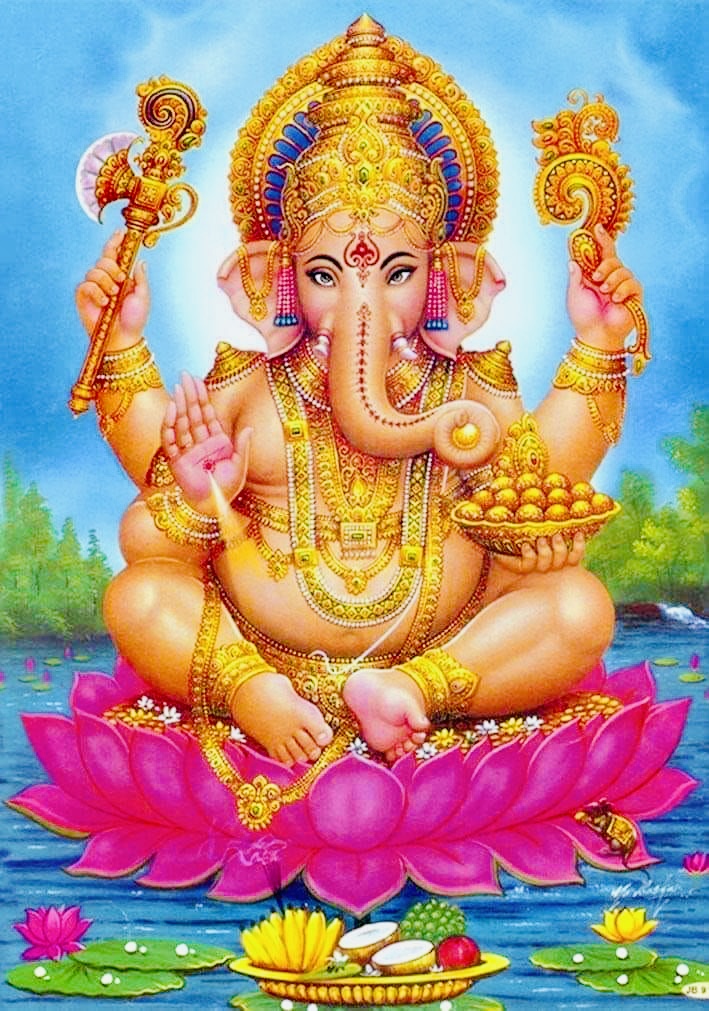
This is Ganesha.
Not merely the remover of obstacles, but the one who rearranges reality so subtly that you only realize later how much has changed.
In Kashi, he is worshipped as Dundhi Raja, a name explained in the Skanda Purana. Dundhi means “to search.” Ganesha searches for what the devotee truly needs, not what they think they want.
When Shiva wished to return to Kashi, Ganesha didn’t argue or confront. He tricked the King of Kashi, restoring cosmic order with intelligence rather than force. Pleased, Shiva praised him not as a warrior, but as the one who finds and bestows.
Now travel westward, about 450 years back, to the tale of Puss in Boots.
A father dies. Three sons inherit: a mill, a donkey, and tragically, it seems; a cat. The youngest son is devastated. A cat eats food and offers no visible return. Sound familiar? Many beginners feel the same way about puja, mantra, or Ganesha sadhana extra time, extra effort, and no immediate “output.”
Then the cat speaks. He promises everything but asks for boots first.
An odd request. Almost unreasonable. Much like Ganesha asking for a vrata, discipline, or restraint that appears unrelated to the mantra itself.
Why starve a little? Why wake earlier? Why simplify life when seeking abundance?
Because logic is not the trickster’s language.
What follows is magic through intelligence. The cat creates wealth, status, marriage, and power not by strength, but strategy. The most telling moment arrives when the cat orders his master to strip and jump into a river no explanations given.
Trust is demanded before reward.
In Ganesha sadhana too, there comes a moment when old concepts, spiritual pride, and borrowed knowledge must be shed. It feels like loss until Ganesha, also known as Rajaputra, seats you near the Raja Simhasana and clothes you anew spiritually and materially.
The elephant-headed god riding a mouse is not absurdity.
It is wisdom disguised as humour.
And those who allow themselves to be guided without demanding explanations at every step often discover that the Trickster was the most compassionate teacher all along.
If reflections like these stirs something within you, you may find their real power not in reading alone, but in shared practice. Our Tantra circle https://shorturl.at/6gxgH explores such living metaphors where Ganesha Mantra, sadhana, and experience meet, gently and steadily.
Shri Maha Ganapataye Namaha.
No responses yet