
There are conversations that linger long after the words are spoken.
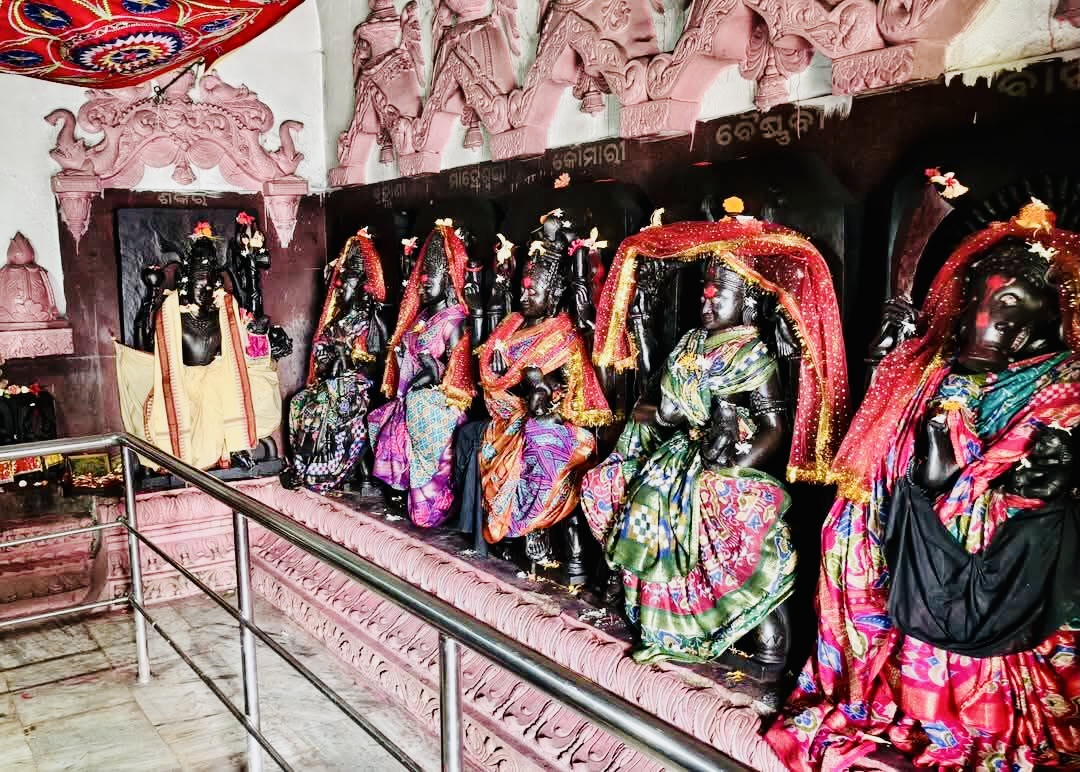
At the Western Ghats Lit Fest, a discussion with Shefali Vaidya and Nilesh Oak became one such moment; one that quietly opened a door into an ancient, pan-Bharatiya mystery: the recurring presence of the Seven Sisters and their solitary guardian brother.
From the rugged Kongu belt of Tamil Nadu to the coastal folklore of Goa, the same pattern appears sometimes whispered as village lore, sometimes etched into ritual, sometimes preserved in Puranic symbolism. Names change. Landscapes shift. But the structure remains uncannily intact.
In the Kongu region, Karuppan: Sangili Karuppan, Karuppasamy, Karuppar is rarely envisioned alone. He stands flanked by the Sapta Kannis, the Seven Sisters. Fierce.
Uncompromising. Deeply protective. Here, ritual is not optional sentiment; it is responsibility. Annual bali offerings are made, not out of fear, but recognition. Acknowledgment of a pact older than memory. When neglected, the village doesn’t interpret misfortune as coincidence, but as imbalance.
This isn’t unique folklore.
The Puranas echo the same rhythm.
When Ma Chandi summons the Sapta Matrukas, the battlefield becomes a sacred storm; Shakti unleashed to annihilate adharma. Yet even divine fury needs containment. Enter Bhairava, the watcher, the regulator, the necessary counterweight who ensures cosmic order is restored, not erased.
Those immersed in Shakta Mantra Sadhana intuitively understand why Batuka Bhairava Sadhana is traditionally paired with Ma Chandi; it isn’t optional theology, it’s energetic logic.
Interestingly, some archaeological narratives replace Bhairava with Veerabhadra. Different form, same function. As I remarked during the discussion, the names shift, but the essence does not. Shefali ji smiled and responded with Goan legends of the Seven Sisters and their brother; same story, retold by different soil.
Nilesh ji offered a sharp insight: humans engage most deeply with stories that feel local, personal. That is how Dharma survives not by rigid uniformity, but by intimate adaptation. Just as Shiva and Parvati’s wedding is claimed by many regions, Devatas too reveal themselves in ways communities can touch, serve, and remember.
This is not fragmented faith.
This is Sanatana Dharma breathing through geography; unchanging at the core, endlessly expressive at the edges.
And when one truly sees it that way, attempts to divide it through regional identity quietly dissolve. What remains is something alive, watchful, and deeply rooted.
These reflections also flow into my book Sangili Karuppan: On Bhairava, Gram Devatas & Ksetrapala Guardians. But more than pages, they live in practice; in the way devotion matures when it is shared, questioned, and experienced together.
If this thread stirred something familiar within you, you may find the next step not in reading further, but in walking alongside fellow seekers within our Tantra circle: https://shorturl.at/6gxgH where such guardians are not just discussed but felt.
Karuppan Thunai.
No responses yet