
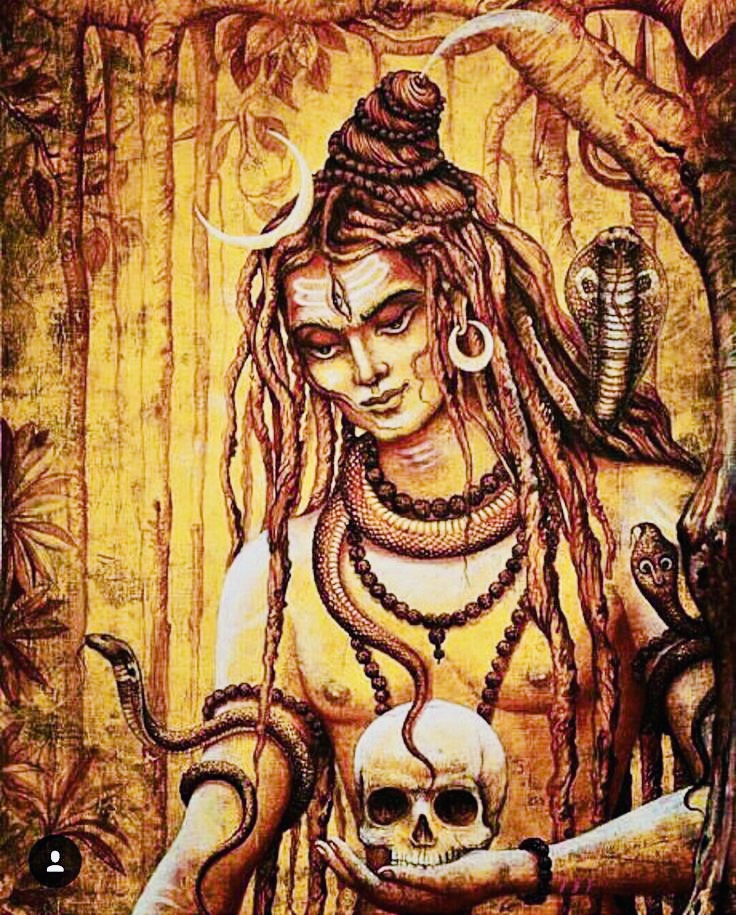
As we enter the sacred night of Lord Shiva: Maha Shivaratri, there is something beautifully radical in the Shiva Maha Purana that I wish to touch upon.
The sages ask a simple question:
“Tell us again about the glory of holy ash, Rudraksha, and Shiva’s names.”
And Sūta smiles;because when seekers ask about Shiva, it means their hearts are already leaning toward freedom.
What follows is astonishing.
The text says that one who lovingly utters Shiva Nama: even a simple “Om Namah Shivaya”—becomes untouched by sin, just as burning charcoal cannot be stained. Think about that image. Fire does not collect dirt. It transforms it.
That is the power of Shiva Nama.
Then comes Bhasma:the sacred ash.
Not cosmetic ash. Not a fashion statement for festivals. Bhasma is a reminder: everything returns to ash. Ego, pride, drama… all eventually become dust. When worn consciously, Bhasma is not decoration. It is philosophy on your forehead.
And then, Rudraksha.
Those small beads, born of Shiva’s tears, are described as equal to the sacred Sarasvatī herself. Wearing Rudraksha is not superstition. It is alignment. It is choosing to keep the company of something sacred close to your pulse.
Here is the part that makes you pause.
The Purana declares that Shiva’s name, Bhasma, and Rudraksha together are equal to bathing in the holy Triveṇī: the confluence of Gaṅgā, Yamunā, and Sarasvatī.
Pause there.
We travel across the country for pilgrimage. We plan, we pack, we post photos. And yet the scripture whispers: you can carry the Triveṇī on your body.
Shiva Nama is Gaṅgā.
Bhasma is Yamunā.
Rudraksha is Sarasvatī.
When these three are present, the place itself becomes sacred.
Even Brahmā weighed the merit of these three against bathing in Triveṇī and found them equal.
The message is gentle but powerful: holiness is not only in geography. It is in remembrance.
You may not live near a sacred river. You may not have the luxury of long pilgrimages.
But you have a tongue to chant Shiva Nama.
You have a forehead that can wear Bhasma.
You have a heart that can choose Rudraksha.
That is democratized divinity.
And perhaps that is why the sages were delighted; because the path was made simple.
If this stirred something within you; if Shiva Nama, Rudraksha and Bhasma feel less like ritual and more like living companionship; then you may be ready to explore this more deeply.
Step gently into our Tantra circle: https://shorturl.at/6gxgH where these symbols become lived experience and devotion ripens into something transformative.
Aum Namah Shivaya
Hara Hara Mahadeva
No responses yet