
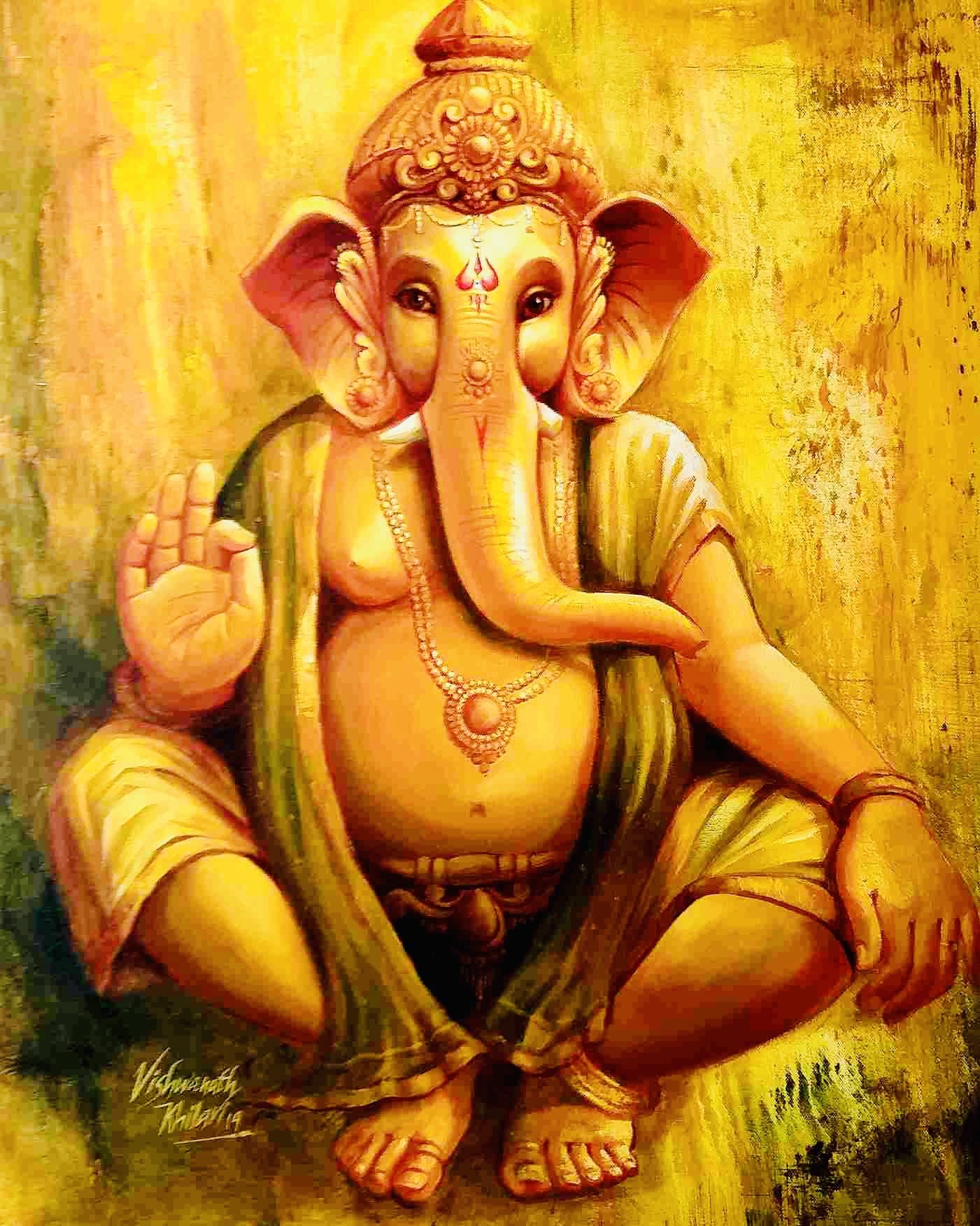
Among the many sacred hymns dedicated to Ganesha, the Maha Ganapati Sahasranama holds a very special place. This powerful Ganesh Mantra tradition is found in the Ganesha Purana, and according to tradition it was taught by Ganapati himself to Shiva.
When the son becomes the Guru of the father… That alone tells us something important.
It is said that this Sahasranama (the thousand names of Ganesha) is even more dear to Maha Ganapati than his own Moola Mantra. And the Phalashruti ; the section that describes the benefits of reciting the hymn is remarkably generous.
Like many sacred texts, it promises the four classic goals of life: Dharma, Artha, Kama, and Moksha. But it goes further. The text speaks of blessings in this world and heavenly worlds as well.
Tradition says that the Maha Ganapati Sahasranama can remove obstacles related to fertility, help couples seeking children, and act as a healing force against various illnesses. In short, Ganapati appears to be saying: “Bring me your problems; I enjoy solving them.”
The blessings extend even beyond this lifetime. It is said that a devoted reciter may attain celestial realms such as Indraloka, Brahmaloka, Vaikuntha, or Shivaloka, receiving honour there as one beloved of Ganapati.
Such a devotee is said to remain forever close to Ganesha, cherished and cared for by Shiva and Parvati just as lovingly as they cherish Ganapati himself. And should the soul choose to return to this world, the tradition says he may even be reborn as a mighty king; carrying with him the rare blessing of remembering his past life.
And if he desires Moksha, that too is granted.
The tradition also promises something wonderfully comforting: the devotee of the Maha Ganapati Sahasranama is protected everywhere by the countless Shiva Ganas.
Even someone weighed down by heavy karmaphala, facing deep sorrow or misfortune, is said to find relief if they recite this Sahasranama for four months with sincerity. Ganapati, the remover of obstacles, may quite literally rewrite destiny.
The great Shakta scholar Bhaskara Raya even composed a concise commentary on this text called the Khadyota, showing the deep reverence this hymn commands in the tradition.
The First Name: Ganeshwarar
The Sahasranama begins with the name Ganeshwarar.
The five elements that form creation: earth, water, fire, air, and ether are also called Ganas. The one who resides within all these elements, governs them, and remains their master is called Ganeshwarar.
This symbolism is beautifully reflected in the iconography of Maha Ganapati, where Siddhalakshmi, the embodiment of creative power, sits upon his lap. His multiple sets of divine arms and the sacred bija syllables in the Ganesh Mantra all hint toward his mastery over creation itself.
The word Gana also means groups such as the Shiva Ganas and Deva Ganas. As the one before whom all these hosts bow, he is rightly called Ganeshwarar: The Lord of the Ganas.
And perhaps that is the gentle beauty of the Ganesh Mantra tradition, every name reveals another doorway into the vast mystery of Ganapati.
If exploring sacred texts like the Maha Ganapati Sahasranama, Mantra, and Tantra awakens your curiosity, you might enjoy walking this path with fellow seekers. Our Tantra circle regularly explores such teachings together feel free to step in: https://shorturl.at/6gxgH and learn with us whenever the inner nudge appears.f Dr. Essex
Aum Ganeshwaraya Namaha
No responses yet