
In childhood, many of us heard that booming line:
Fee-fi-fo-fum,
I smell the bones of an Englishman,
Be he alive, or be he dead
I’ll grind his bones
And get his dough.
Not exactly the kind of greeting you want when trespassing in someone’s castle. Poor Jack must have wondered, “Why did I trade our only cow for… beans?”
Most of us know the story of Jack and the Beanstalk and as adults, it feels less like a fairy tale and more like a lesson whispered in symbolism.
In the classic tale of Jack and the Beanstalk, Jack and his mother are struggling, and their last hope is selling their only cow for food. So, Jack heads to the market with a simple goal: sell cow, buy dinner.
But on the edge of the village; that place where logic packs its bags and magic starts whispering he meets a mysterious man.
The stranger offers five “magic beans” for the cow, and Jack, charmed (or duped, depending on who you ask), agrees. When he gets home, his mother is understandably unimpressed. She scolds him for trading their only source of survival for what looks like meaningless seeds. To her eyes, Jack didn’t just make a bad trade, he made a catastrophe.
Folklore scholar Diane Purkiss explains that the trickster archetype lives in the space between worlds human and otherworldly and appears precisely to disrupt the ordinary.
The trickster crashes the predictable life of the hero, causing chaos not out of malice, but because transformation requires disturbance.
And this, truly, is the beginning of Ganesha Mantra Sadhana.
Most seekers arrive with a fixed goal:
“I need this job.”
“I must fix this relationship.”
“If Ganesha helps me accomplish this, I’ll continue.”
We all want results preferably express delivery, no detours.
But Ganesha rarely behaves like a vending machine. He behaves more like the trickster-teacher. I have seen countless sincere practitioners begin Ganesha Sadhana and receive an immediate blessing, a job offer, a contract, a personal breakthrough only to watch it disappear the moment they reach for it:
Not to punish but to reveal attachment, expectations and the smallness of the seeker’s vision.
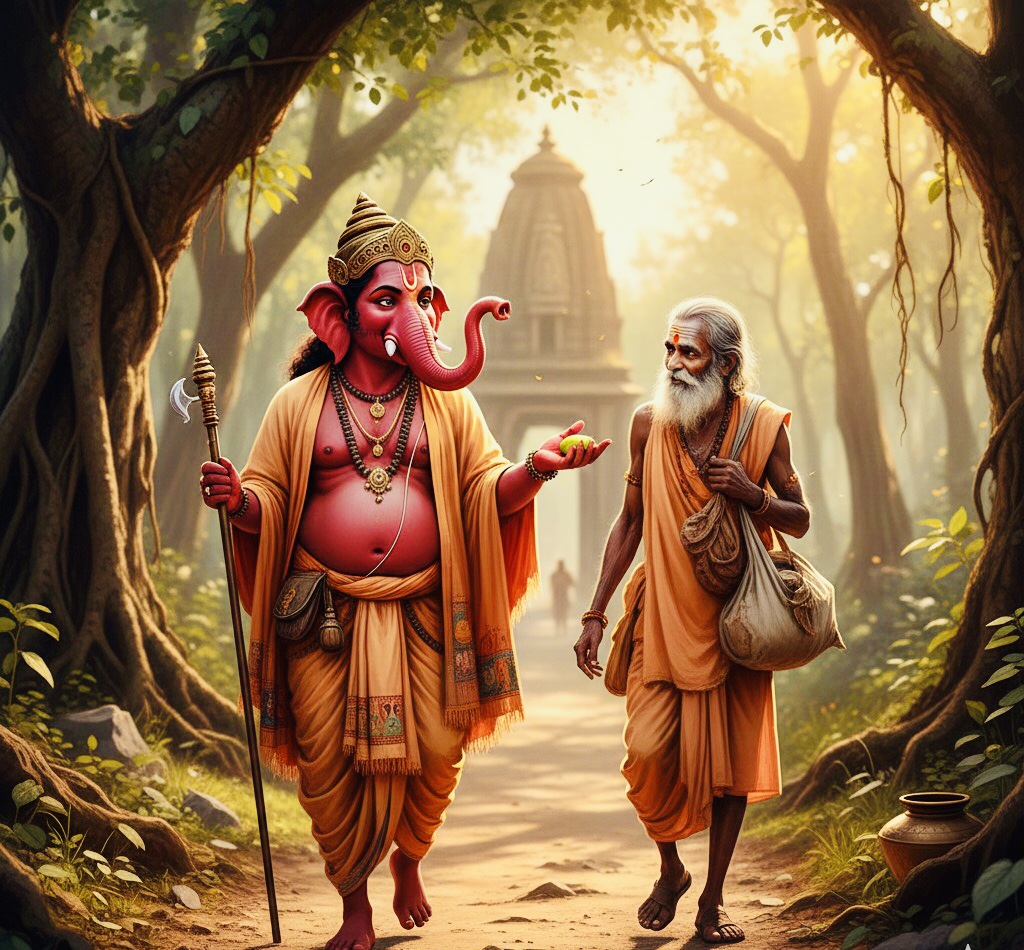
Some say Ganesha holds out the fruit to draw you close… and then ensnares you with his Pasha, redirecting you.
We may chase the want, but he gives the need.
Some get frustrated and walk away.
Others stay, trusting that Ganesha sees further than their fear and deeper than their desire. Those who trust him allow their small identity to dissolve into his guidance. Those are the ones who transform.
Because Ganesha does not train you to survive life.
He trains you to rise above it.
To climb.
To face your giant.
To return with wisdom instead of wishes
The rest cling to control, jump to another deity practice, and eventually return years later to the same crossroads where Ganesha first waited.
Logic would’ve fed Jack for a week. Surrender fed him a destiny. The magic beans lifted him beyond fear, beyond limitation, to face the giant and claim his fortune.
By releasing the cow, a symbol of his lower comfort and certainty and accepting the five magic beans, Jack rose beyond the ordinary. He climbed to the clouds, faced the giant, and claimed a life far greater than the one he left behind to face the giant and claim his fortune.
Likewise, those who surrender to Ganesha Mantra Sadhana discover that he turns ordinary seekers into giant breakers.
If something in these words awoke a restlessness to understand Ganesha, then it is time to walk the path https://shorturl.at/4Fs5a not alone, but with guidance. Step into our Tantra circle and deepen your journey with Ganesha.
Shree Maha Ganapataye Namaha.
No responses yet