
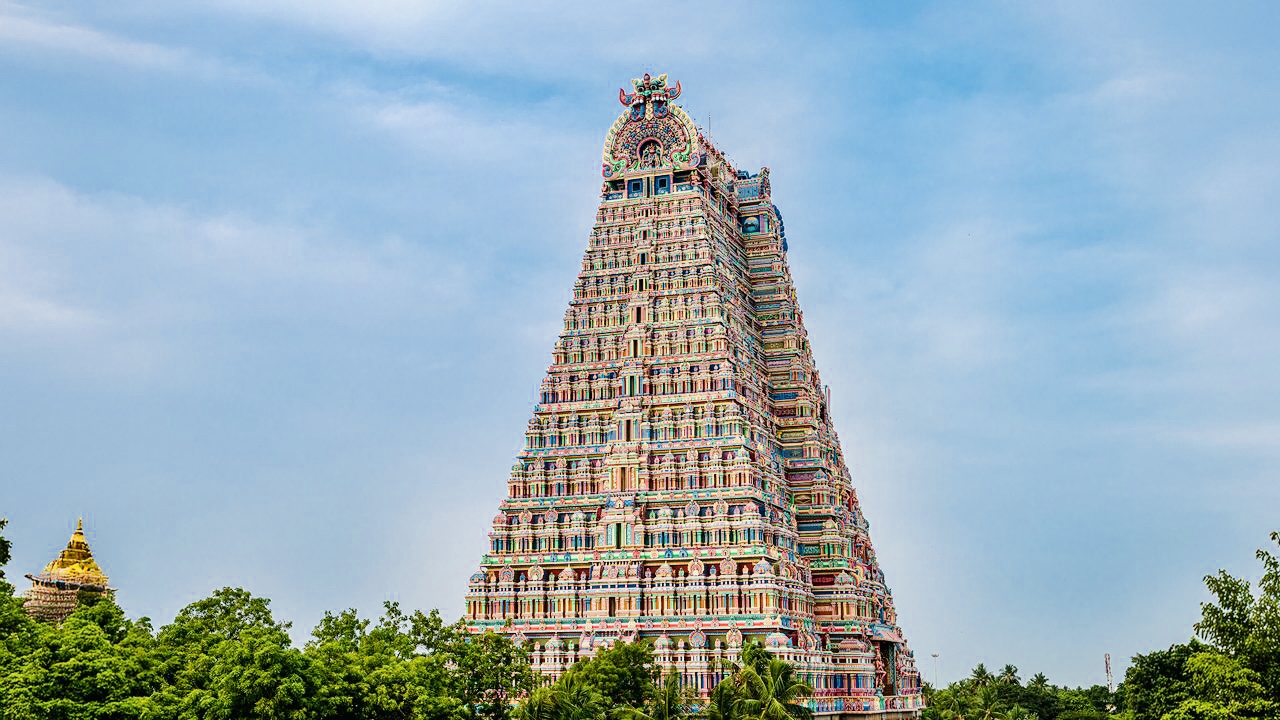
It is often said that invasions scarred North India.
Less often spoken about is how South India too faced the Mughal and Delhi Sultanate forces and how it responded.
In 1311, Malik Kafur invaded the southern kingdoms. The Pandyan lands were ravaged. Chidambaram was desecrated. The utsava murti of Sri Rangam was taken though locals later managed to retrieve it.
In Madurai, enormous ransom was paid to safeguard the deities.
But that is only half the story.
What we do not hear enough about is resistance.
An aged king, Vikrama Pandya Thevar, brother of Kulesekara Pandya rose in fury and attacked Kafur’s forces. The Malayalam text Lilattilakam records that he defeated and drove the invading army out of the Pandyan lands.
The South did not simply endure.
It pushed back.
Yet danger returned. In 1323, Ulugh Khan invaded again. This time, the people were better prepared.
At Srirangam, under the guidance of great acharyas like Vedanta Desika and Pillai Lokacharya, swift action was taken. A massive stone wall was constructed in front of the moolavar sannidhi.
On the banks of the Kollidam, 12,000 devotees fought and laid down their lives buying time for the wall to be completed and the utsava murtis to be safely taken away.
Twelve thousand lives for their Perumal.
That is not exaggeration. That is bhakti in action.
In Madurai Meenakshi temple, Shiva’s sannidhi was sealed with stone, and a decoy lingam installed to mislead invaders. Meenakshi Devi’s moola murti was removed and hidden within the temple structure itself.
Utsava murtis were buried or carried into forests. Priests continued basic pujas in secrecy.
Meanwhile, the elderly Pillai Lokacharya said to be 118 years old carried the utsava murti of Srirangam through various regions to protect it.
Worship continued wherever the deity rested.
Today, the site preserves the sacred paadam of Srirangam Ranganathar and the thiruvarasu of Pillai Lokacharya. After his passing, the utsava murti journeyed through Kerala, Mysore, Tirumala Tirupati, and Gingee before finally returning to Srirangam; a moving testament to devotion that safeguarded Dharma through turbulent times.
This is how South India faced invasion.
Not only with swords but with strategy.
Not only with kings but with communities.
Not only with grief but with unwavering Dharma.
Temples were attacked. But devotion did not collapse.
May we never forget that what survived was not stone alone but spirit.
And perhaps the deeper question for us is this: how do we protect Dharma today? Through practice, through Mantra, through lived commitment. If this story moves you from memory to action, step into our Tantra circle: https://shorturl.at/6gxgH where devotion is not history, but a living path walked together.
Source from: பாண்டியர்கள் தேடி பயணம்
No responses yet