
If everything in Sanatana Dharma vanished tomorrow, temples, puja paddhatis, commentaries, even ritual memory; there is one thing that could quietly bring it all back to life.
The Sahasranama.
These thousand-name hymns are not poetry in the decorative sense. They are compressed spiritual technologies.
Each name is a seed that contains theology, ritual, mantra, philosophy, and lived practice. Pull one thread, and an entire lineage begins to reappear.
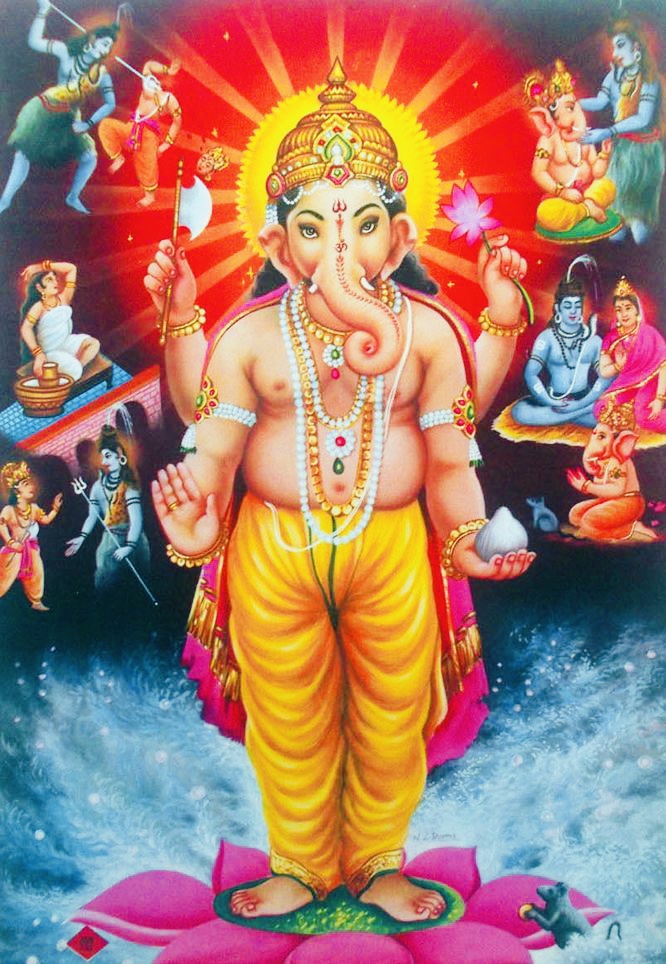
Recently, in a discussion with fellow Ganesha upasakas, we paused on a single name from the Maha Ganapati Sahasranama:
ॐ कूष्माण्डसामसम्भूतये नमः
Om Kūṣmāṇḍasāmasambhūtaye Namaḥ
At first glance, it looks obscure. But obscurity is often where Tantra hides its treasures.
This name points to the Kūṣmāṇḍa Sāma mantras of the Sama Veda, sacred chants used in specific homas for purification and removal of pāpa. Their unique power, their sambhūti or specialization, is said to arise only through Ganapati.
In other words, the purity-giving force of these mantras is not independent; Ganesh Mantra Shakti animates them from within.
Why Kūṣmāṇḍa? In these homas, pumpkins are offered into the fire; a tangible symbol of surrendering heaviness, stagnation, and accumulated karmic residue. Some sadhakas even refer to Kūṣmāṇḍa homas as the gold standard of Vedic expiation, explicitly mentioned in the Vedas themselves and traditionally prescribed for severe karmic burdens.
Now Tantra quietly joins the conversation.
Ganapati presides at the Mūlādhāra, the root where fear, inertia, and negativity first coagulate. Tantra consistently places Ganesh mantra upasana at the beginning not as symbolism, but as psychological and energetic hygiene.
The connection clicks: what Kūṣmāṇḍa homas do ritually, Ganesh Mantra does internally.
The name also carries a subtler hint. Texts mention kūṣmāṇḍas, vināyakas, paiśācas, and bhairavas as categories of disruptive forces not deities, but obstacles of consciousness. This name quietly declares Ganapati as the hidden authority over them, the one who neutralizes disturbance before it takes form.
And then there is sound.
The Sama Veda is unique musical, melodic, alive. The Vallabha Upanishad notes that among all Vedic recitations, Maha Ganapati delights most in Sama Veda gāna. When Ganapati is understood as Śabda Brahman seated in the Mūlādhāra, this makes perfect sense.
Sound is not decoration to him; it is substance.
So much emerges from one name.
That is the genius of the Sahasranama and the quiet invitation of Ganesh Mantra itself. When a single syllable opens this much meaning, practice stops being mechanical and starts becoming intimate.
If reflections like these stir your curiosity rather than overwhelm it, our Tantra circle offers a grounded space to explore mantra, meaning, and lived experience slowly, respectfully, and without spiritual bravado.
You’re welcome to step in https://shorturl.at/eR4FZ when it feels right, and let the names reveal themselves in their own time.
Shri Maha Ganapataye Namaha
No responses yet