
There is a quiet truth about Hindu philosophy that many people outside South India do not fully realise.
Some of the deepest rivers of devotion and spiritual insight have flowed from Tamil lands for over a thousand years.
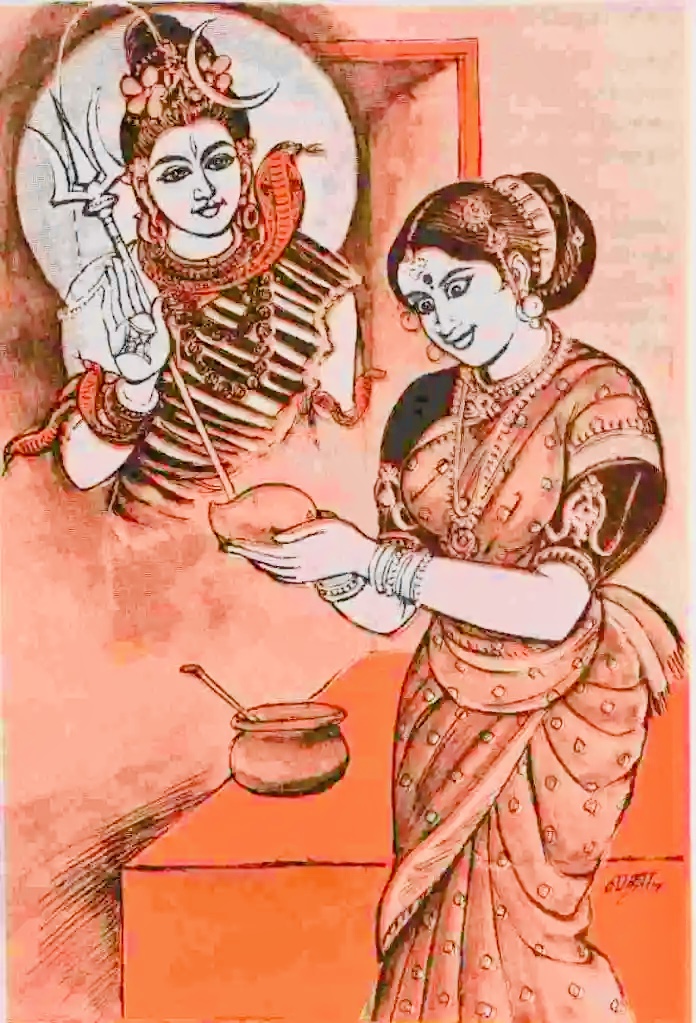
Take the magnificent Thiruvasagam, one of the great jewels of Shaiva Bhakti. Among Tamil devotees, there is a beloved piece of lore. Someone once asked Shiva what he would do after Pralaya, the great cosmic dissolution when the universe dissolves into silence.
Shiva simply smiled and said: “I will read Thiruvasagam.”
Now pause for a moment. When the Lord of Time himself says he would read a book after the universe ends… that book must be doing something right.
Yet, outside Tamil Nadu, surprisingly few people have heard of it.
And then there are the mysterious Tamil Siddhas: the wandering mystics, alchemists, yogis and realised beings who stood at the fascinating intersection of Bhakti and Tantra Sadhana. Their poetry speaks of Mantra, inner transformation, the body as a temple, and the fierce grace of the Devata.
From time to time, people ask me a sincere question: “Why don’t you bring more of these southern teachings to a wider audience?”
It is a good question. But spiritual traditions rarely move according to human enthusiasm alone.
In our tradition, the Devata associated with a teaching must will it. Without that grace, even the most well-intentioned effort can feel like trying to light a lamp in the wind.
Interestingly, when these ideas are shared in English online, another curious reaction appears. Occasionally someone comments, “Speak in Hindi if you want to speak about Hinduism.”
It is an odd statement; considering the vast diversity of this civilisation. Thankfully, many of my own Hindi-speaking students quickly point out the irony.
The truth is simple. Our Devatas, saints and philosophies emerged through many languages, many regions, many rasas.
Tamil, Sanskrit, Kannada, Bengali, Hindi; each one carries a different fragrance of the same sacred garden.
And one of the most beautiful features of this tradition is how openly it has revered women saints.
Figures like Avvaiyar, Karaikal Ammaiyar, Akka Mahadevi, and Anandamayi Ma stand as luminous examples. Each was a blazing sun of devotion in her own time, reminding us that Shakti flows freely through the feminine.
We remember them not because it is fashionable.
We remember them because it is dharma.
If reflections like this stir your curiosity about the deeper worlds of Mantra, Tantra, Bhakti, and the saints of our tradition, you may enjoy exploring them alongside fellow seekers.
Our Tantra circle: https://shorturl.at/6gxgH is a place where these living teachings are shared slowly, respectfully, and with devotion. If that journey calls to you, you are warmly welcome to step into the space and walk a little further with us.
Shri Maha Ganapataye Namaha
Shri Matre Namaha
Karuppan Thunai
No responses yet