
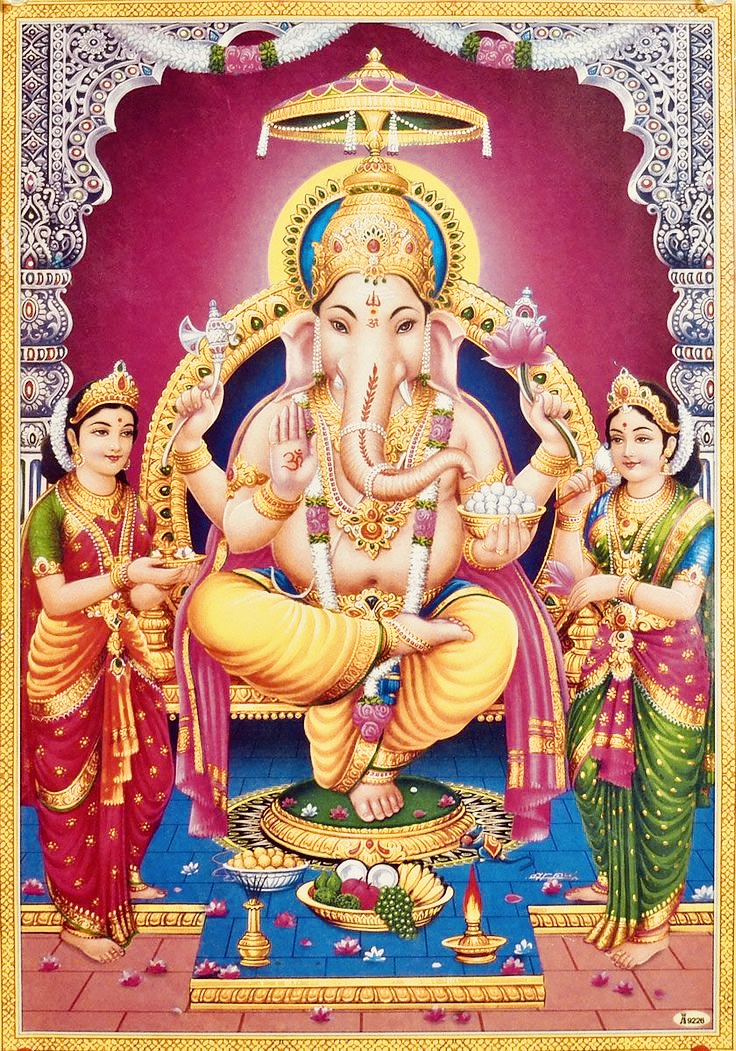
If you have ever explored the Ganesha Sahasranama, you may have noticed something curious.
The second name of Ganesha is Ganakreedar.
At first glance, it feels like just another sacred name among a thousand. But as with many things in Mantra Sadhana, the deeper meaning reveals a quiet spiritual secret.
In Hindu tradition, the Guru and the Devata are not separate. A true Guru is not merely a teacher who gives lectures and tea-time philosophy.
The Guru is someone who has realised the Devata, embodies the Devata, and gently leads the seeker toward that same divine experience.
That is why most authentic Tantra and Mantra traditions begin with reverence to the Guru Parampara:the lineage of teachers who preserved the path. Before beginning their daily sadhana, many practitioners recite a Guru Paduka Mantra, mentally bowing at the feet of the Gurus who carried the flame of wisdom through time.
Think of it like logging into a sacred Wi-Fi network. Without the password of the lineage, the connection can be… patchy. This reverence appears even in the technical aspects of Mantra Sadhana, such as Nyasa. In Nyasa, the practitioner touches different parts of the body while invoking sacred energies for purification and alignment.
A typical Nyasa begins by declaring the mantra and its Devata. For example, one may begin with:
“Aum Asya Shri Maha Ganapati Maha Mantrasya…”
Then comes a beautiful moment: the practitioner touches the head, invoking the Rishi:the seer who first revealed the mantra to the world. At that moment, one visualises the divine feet of the Guru resting upon the crown of the head.
In the case of the Ganapati Atharvashirsha, the Rishi of the Ganapati Moola Mantra is Ganaka Rishi.
And here is where the name Ganakreedar becomes luminous.
Tradition holds that Ganakreedar was the first Guru to spread the Ganapatya philosophy, and remarkably, he is described as a direct disciple of Ganesha himself.
Because of this intimate connection, he is considered non-different from Ganesha, much like how several Shaiva traditions see Nandi as inseparable from Shiva.
So when the Maha Ganapati Sahasranama places Ganakreedar as the second name, it quietly reminds us of something profound:
The path to the Devata always flows through the Guru.
And every time a devotee chants:
“Aum Ganakreedaaya Namaha”
they are not only saluting a sacred name; they are bowing to the first Guru who carried Ganesha’s wisdom into the world.
If reflections like this awaken your curiosity about Mantra, Tantra, and the living traditions of Ganesha, you might enjoy walking a little further on this path with fellow seekers.
Our Tantra circle: https://shorturl.at/6gxgH is a quiet space where these teachings move from interesting ideas to lived experience—always guided by devotion, lineage, and the grace of the Devata. If that calls to you, you’re warmly welcome to join us there.
Om Mahaganapataye Namah
Aum Ganakreedaaya Namaha
No responses yet