
A Facebook acquaintance once messaged me, mildly perplexed and very earnest.
“Why,” he asked, “did you write that a particular Devata is an amsha of Vishnu, and then like a post saying the same Devata is an amsha of Shiva?”
He probably meant well. But questions like these quietly reveal three things:
first, a lack of lived sadhana with Devatas;
second, a deep attachment to tidy, black-and-white categories;
and third, this one is common; far too much book reading with far too little practice.
There’s a beautiful line in Tamil Saiva philosophy:
“Avan arulaaley, avan thaal paninthu.”
Only by the Devata’s grace do we even gain the capacity to worship them.
That line alone dismantles the modern obsession with classification.
A Devata does not sit comfortably inside the five senses, the rational mind, or logic as taught in today’s classrooms. And certainly not inside the unfortunate Western lens many of us were trained to view reality through. That lens demands labels, boundaries, and neat definitions.
It’s a colonial hangover, spiritually inconvenient and metaphysically inaccurate.
Here’s a small experiment.
First, pick up a Sahasranama of a deity you know nothing about. Read it carefully. Make notes. Feel very confident about your understanding.
Second, spend at least two years in formal mantra sadhana of that deity: daily worship, repetition, contemplation of the namas.
Third, return to your original notes.
If you’re honest, you’ll want to tear them up. Possibly with embarrassment.
Why does this happen? Because scriptural words are vessels, not destinations. The Rishis weren’t handing us definitions; they were pointing toward lived realities. Without sadhana, the text remains locked.
With sadhana, the same words begin to glow differently.
This is also why tying a Devata to one “vanilla flavour” doesn’t work.
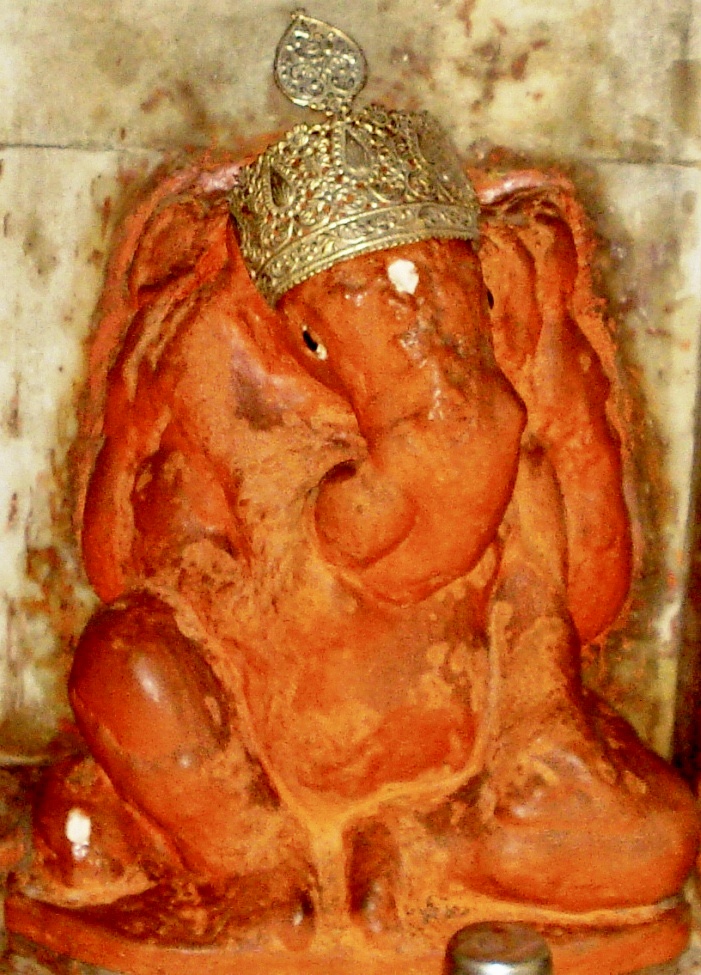
Take Ganapati as a simple, generic example.
In the Vinayaka Purana, Ganapati appears as Mahotkata, son of Rishi Kashyapa and Aditi.
In the Shiva Purana, he is created by Devi herself.
In the Varaha Purana, he emerges from Shiva.
The Brahma-vaivartha Purana narrates that Ma Parvati performs a vrata for Vishnu and begets a son who is an amsha of Sri Krishna.
And in the Brahmanda Purana, Devi Radha makes it explicit: the Shiva principle and Vishnu principle are one.
Just as Parashurama is a Shiva principle in a Vaishnava form, Ganapati is a Vaishnava principle in a Shaiva form.
If all this is taken merely at face value, it becomes intellectual clutter. If approached through sadhana, it becomes revelation.
Devatas are not confused. Only our categories are.
And perhaps that is the quiet invitation to move from arguing about forms to encountering them. If this reflection stirred something more than agreement or disagreement, you may find value in walking alongside fellow seekers who are learning through practice rather than labels.
Our Tantra circle: https://shorturl.at/6gxgH exists precisely for this reason where understanding unfolds not through debate, but through disciplined experience and grace-led inquiry.
No responses yet