
karmaṇo hy api boddhavyaṁ
boddhavyaṁ ca vikarmaṇaḥ
akarmaṇaś ca boddhavyaṁ
gahanā karmaṇo gatiḥ (Gita 4:17)
Sri Krishna tells Arjuna that the movement of Karma is deep, subtle, and difficult to grasp.
If Arjuna guided directly by Bhagawan needed clarification, what about us?
Still, reflection helps.
At its simplest, Karma is action of thought, word, and deed. Actions generate Paapa and Punya. Paapa ripens into painful experiences. Punya ripens into pleasurable ones.
Most of us are living a mixed fruit salad of both.
Let’s simplify it.
The Big Fruit Cart: Sanchita Karma
Think of Sanchita Karma as a massive fruit cart filled with red and green apples. Red apples represent Paapa; green apples represent Punya. This cart contains the accumulated results of countless past actions from lifetimes beyond memory.
And here’s the thing: we keep adding apples daily.
Every reaction. Every choice. Every impulse.
The cart grows.
The ATM Withdrawal: Prarabdha Karma
Now imagine walking to an ATM. You don’t withdraw your entire life savings. You withdraw what is needed at that moment.
Prarabdha Karma is like that withdrawal.
From the vast Sanchita account, only certain ripe karmas are selected for this lifetime. Only the apples ready to ripen are placed in your fruit basket.
Thankfully, for most of us, it’s a mix.
Pleasure and pain. Gain and loss. Applause and insult.
Balanced not random.
The Apples You’re Adding Now: Kriyamana Karma
Kriyamana Karma is what you are doing right now.
This very moment.
It is the fresh batch of apples you’re adding to the cart. Today’s reactions become tomorrow’s fruit.
Does Good Karma Cancel Bad Karma?
No.
This is where social media spirituality often goes wrong.
Doing a puja does not erase hurting someone. Getting angry does not nullify years of sincere meditation. Each action has its own trajectory.
You experience the Punya of the good.
You experience the Paapa of the harmful.
They don’t cancel. They coexist.
Then What Is the Use of Pariharas, Bhakti, Mantra?
Good question.
If karma must be experienced, why devotion? Why remedies? Why prayer?
Think of cooking.
If a dish turns unbearably spicy, we don’t throw it away. We add curd. The spice remains but its intensity softens.
Similarly, not all karmas are carved in stone. Some are written in pencil. Grace can dilute, redirect, soften.
There’s a story of a man warned repeatedly by astrologers that prison time was in his destiny. He ignored it until events unfolded: criminal proceedings, civil cases, chaos not of his direct making. After immense struggle, he escaped major consequences.
Eventually, he was sentenced but for five days. Then it was reduced to one. And finally, he merely spent a night in a holding cell.
Was the karma avoided?
Or softened?
Grace doesn’t always erase. It transforms intensity.
How Different Paths Deal with Karma?
Sushumna vahini prane sunye visati manase
Tada sarvani karmani nirmulayati yogavit
The Hatha Yoga Pradipika says when prana flows through Sushumna and the mind dissolves in stillness, karma is uprooted.
Certain Kriya and Kundalini traditions teach that stored karma can be burned through disciplined practice. (Though some advanced techniques are not for householders; learn only under a competent Guru.)
Jnana marga goes further. The Gita (4.37) declares:
yathaidhānsi samiddho ’gnir bhasma-sāt kurute ’rjuna
jñānāgniḥ sarva-karmāṇi bhasma-sāt kurute tathā
“As fire reduces wood to ashes, the fire of knowledge burns all karma.”
For the realized being, the Jeevan Mukta, accumulated karma is destroyed, leaving only the minimal Prarabdha required to exhaust this life.
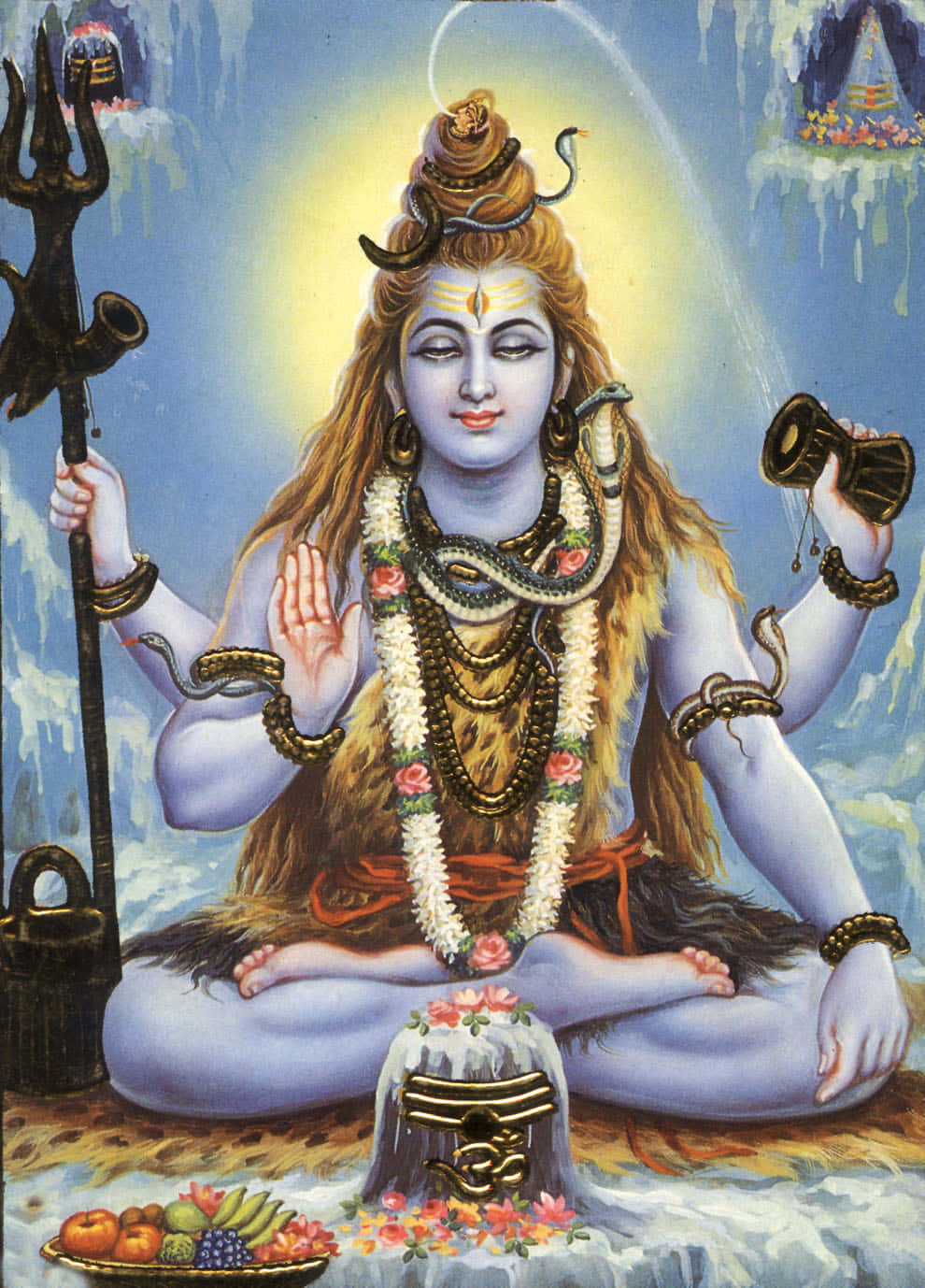
As the Tamil Saiva saint Appar sings, even logs piled to the sky are reduced to ash when fire touches them. Likewise, Nama Shivaya burns karmic stockpiles.
Vinnura Adukiya Viragin Vevvalal
Uniya Pugilavai Ondru Illaiyaam
Panniya Ulaginil Payindra Pavatthai
Nanindrarupathu Nama Shivayave (Appar, Thevaram)
Bhakti, Jnana, Yoga: each path has its method.
But outside of Ishwara, no one can fully map karma’s complexity. Fortunately, we don’t need to.
Effective traditions already show us what to do.
Add fewer red apples. Ripen what comes with dignity. And stay close to the fire that purifies.
If reflections like these help untangle the knots of Karma, come sit with us in our Tantra circle: https://shorturl.at/6gxgH where practice turns philosophy into lived experience, and grace isn’t theory but transmission. Step into the space where devotion deepens and guidance is real.
No responses yet